
Tomato: the King of Summer
Juicy, colourful and a staple of everyday cooking, tomatoes are one of the world's most loved and widely consumed foods. Today, it is almost impossible to imagine Italian cuisine without a tomato sauce, a fresh salad or a pizza featuring this iconic ingredient. Yet the tomato's story is far more surprising than you might think, and Italy only enters the picture long after its journey began.
Native to Central and South America, tomatoes were brought to Europe by Spanish explorers during the sixteenth century. For many years they were grown mainly as ornamental plants, as they were believed to be unsuitable for eating. Over time, however, they found their way into the kitchen and eventually became one of the defining symbols of Italian gastronomy.
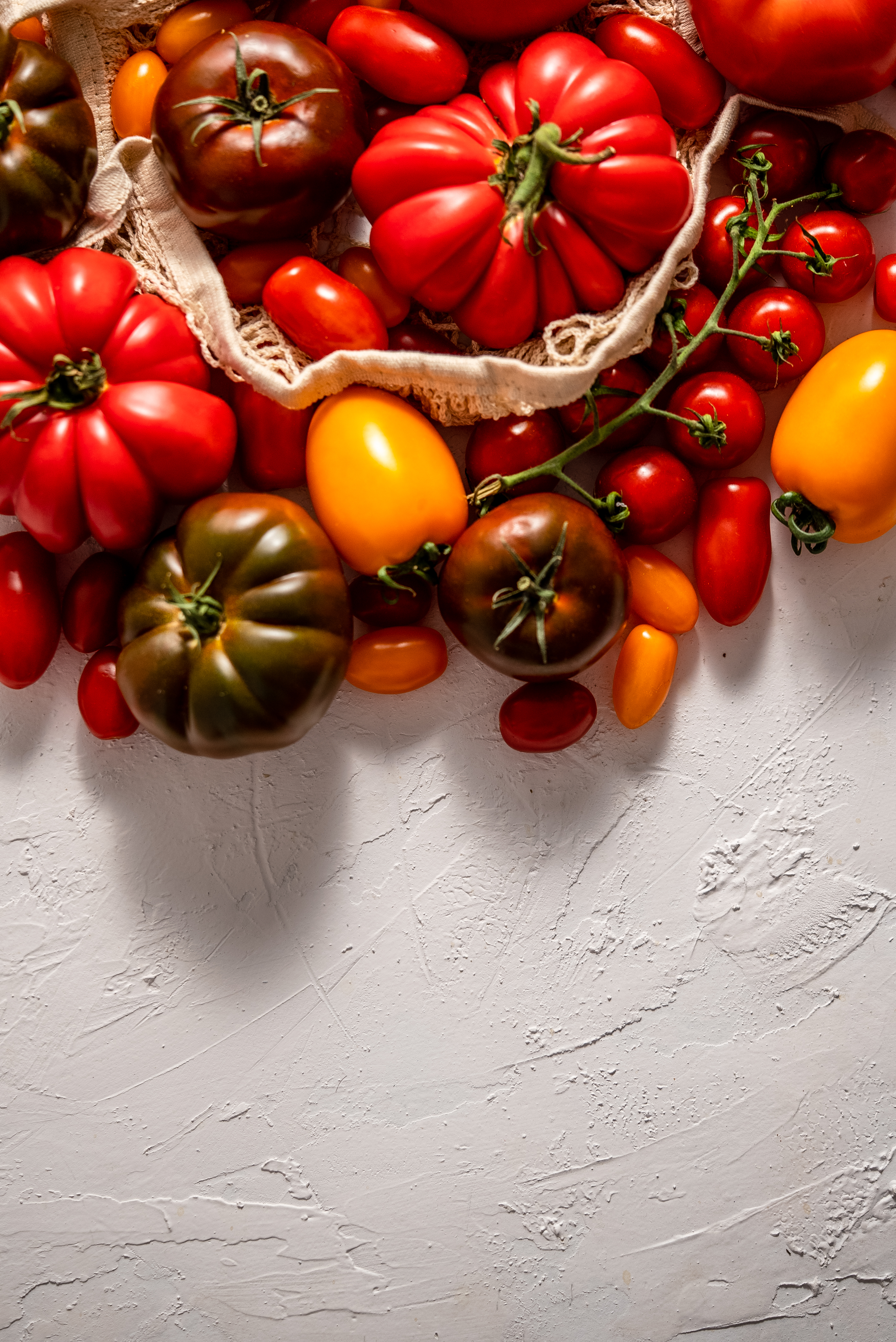
Although we often refer to "the tomato" as if it were a single product, there are actually countless different varieties. From the San Marzano, perfect for sauces and preserving, to the large cuore di bue (oxheart) tomato, ideal for salads, as well as datterino, camone, cherry, Piccadilly, costoluto, pomodorino del Piennolo and ramato varieties, each offers its own distinctive flavour, texture and culinary use. Nor are tomatoes always red: yellow, green, orange, blue and even almost black varieties bear witness to an extraordinary biodiversity.
From a nutritional point of view, tomatoes are made up mostly of water, are naturally low in calories and provide a good source of vitamin C, vitamin A and potassium. Their best-known compound, however, is lycopene, a powerful antioxidant with anti-ageing properties that is found mainly in the skin. An interesting fact? Unlike many beneficial nutrients, lycopene becomes easier for our bodies to absorb after cooking.
The tomato's many qualities have also found applications beyond the kitchen. Tomato extracts are widely used in cosmetics and food supplements, while researchers continue to explore their potential in the field of nutraceuticals - the science that studies the health-promoting compounds naturally present in foods and their role in helping to prevent and manage specific conditions. Even the by-products of tomato processing, such as those left over from making passata, are finding new life. They can be transformed into disposable trays or fully biodegradable plant pots for nurseries, which naturally decompose in the soil and provide nutrients for young plants.
Tomatoes have also left their mark on culture and the arts, becoming true icons of contemporary society. One of the best-known examples is Andy Warhol's 1962 Campbell's Soup Cans series, in which tins of the famous tomato soup were transformed into iconic works of Pop Art, elevating an everyday product into a symbol of mass culture. Tomatoes have also appeared on the big screen in Fried Green Tomatoes, the American film based on Fannie Flagg's novel, and in Quentin Tarantino's Pulp Fiction, where Mia Wallace, played by Uma Thurman, tells the memorable joke about a family of tomatoes. In Italian popular culture, they are equally unforgettable thanks to Viva la pappa col pomodoro, the famous song performed by Rita Pavone as Gian Burrasca in the beloved television series of the early 1960s.
From the dining table to museums, from scientific research to cosmetics, tomatoes continue to tell a story of tradition, innovation and extraordinary versatility. A simple ingredient that, time and again, has proved capable of winning over the world.