
Tomatoes in Every Possible Way
If there is one ingredient capable of bringing together cultures, traditions and flavours, it is undoubtedly the tomato. Fresh or cooked, starring role or supporting act, it constantly reinvents itself, adapting to both simple preparations and more elaborate recipes. Its versatility has made it one of the most widely used foods in the world, appearing not only in iconic Italian dishes but also in countless international specialities and even in cocktails.
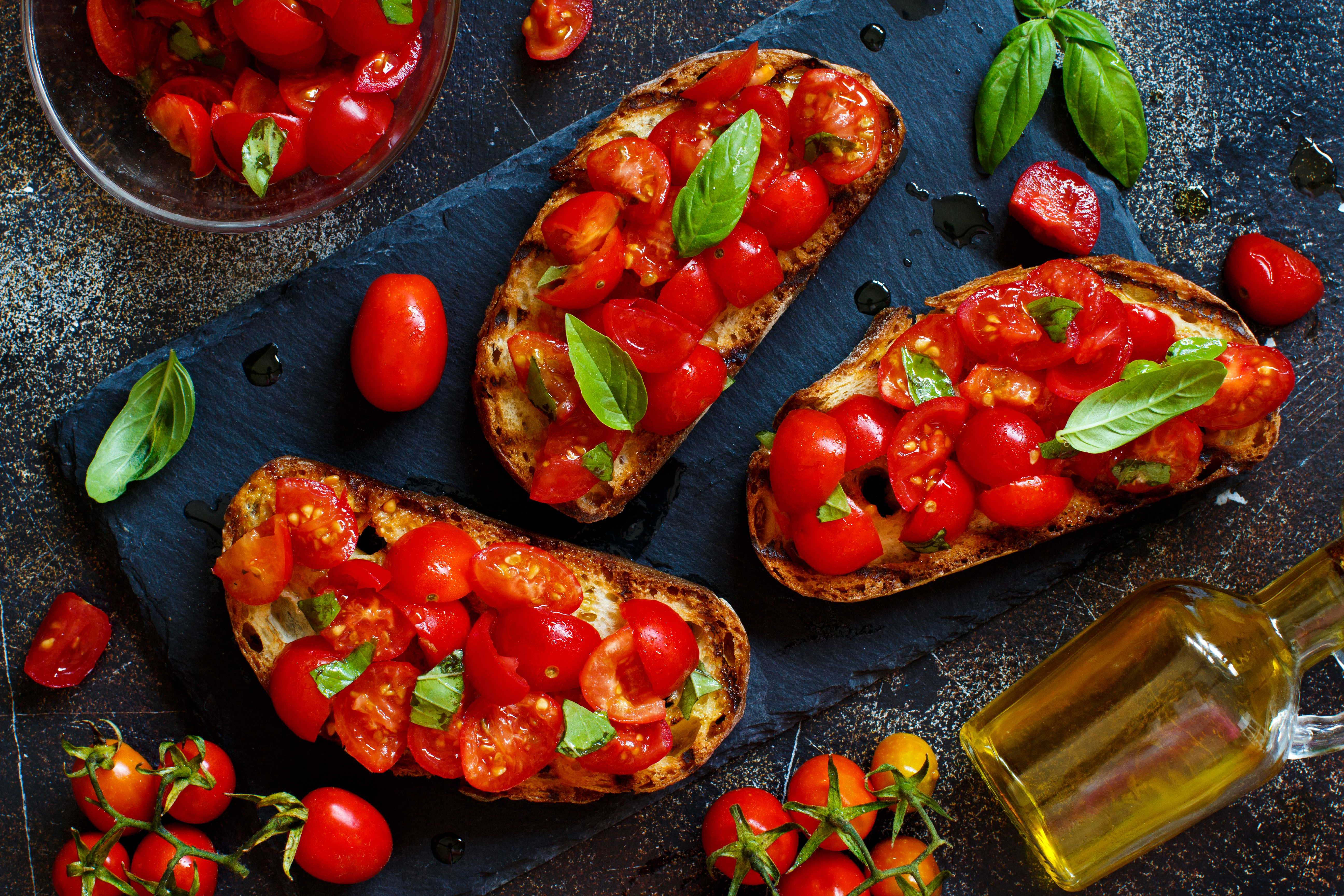
If we look at some of the Italian preparations where tomatoes play a central role, we find crisp bruschetta or frisella topped with fresh tomatoes and extra virgin olive oil, a summer Caprese salad with tomatoes and mozzarella, or a flavourful panzanella made with bread, tomatoes, red onion, basil, olive oil, salt and vinegar. Tomatoes can also be transformed into passata, preserves or sun-dried tomatoes, extending their flavour far beyond the summer season and keeping alive a domestic tradition that remains deeply rooted in Italian kitchens. From these preparations come many of the sauces that have shaped Italian culinary culture and made it one of the most appreciated in the world.
The main tomato-based sauces begin with the simple tomato sauce, an essential preparation that forms the foundation of countless regional recipes. In ragù, it slowly cooks with meat over a long period, creating a rich and well-balanced sauce; in amatriciana it combines with guanciale and pecorino cheese to produce one of the most iconic dishes of Lazio cuisine; while in pasta alla norma it enhances the flavour of aubergines and salted ricotta, expressing the full identity of Sicilian tradition. Alongside these classics we also find puttanesca, marinara and arrabbiata sauces, as well as, of course, tomato sauce used in countless pizza variations.
However, the success of the tomato goes far beyond Italy. In Spain it takes centre stage in the famous pan con tomate, one of Catalonia’s most iconic tapas, made by rubbing ripe tomato onto toasted bread and finishing it with extra virgin olive oil and salt. Also from Spanish tradition comes salmorejo, a cold soup made from tomatoes, bread, olive oil and garlic, with a smooth, velvety texture and intense flavour, often served with chopped hard-boiled eggs and cured ham. Different dishes, yet united by their ability to showcase the tomato in its most authentic form.
Across the Atlantic, tomatoes are a key ingredient in Mexican pico de gallo, a fresh salsa served with tacos and tortillas, while in many South American countries they are used in sauces for meat and fish. In parts of Asian cuisine, tomatoes are combined with local spices and aromas, creating original interpretations that highlight their remarkable adaptability. In Africa, meanwhile, shakshuka is widely known - a Maghrebi dish made with tomatoes, garlic, onions, green peppers, spices and eggs.
Tomatoes have also conquered the world of cocktails. The most famous example is undoubtedly the Bloody Mary, born from the combination of tomato juice, vodka, lemon juice and spices, and over time becoming an icon of international mixology thanks to its bold, unmistakable flavour. Alongside it we find the Virgin Mary, its non-alcoholic version, as well as numerous modern interpretations that use tomato juice as a base for creative drinks balancing freshness, acidity and savoury notes.
Whether starring in a pasta dish, a Spanish tapa or a cocktail served at aperitivo time, the tomato continues to demonstrate its unique versatility. A seemingly simple ingredient that travels across distant culinary traditions, constantly reinventing itself while preserving the authentic flavour that has captivated tables around the world for centuries.